Fake AI Chatbots and Deepfake Impersonation: The New Face of Fraud in 2026
You get a message from your bank's support chat. The agent is polite, professional, and knows your name. It asks you to verify your account by entering your password and one-time code. You comply — and within minutes, your account is drained.
The "agent" was never human. It was an AI chatbot built by scammers.
This is one of the fastest-growing fraud tactics of 2026, and it's catching millions of people off guard. Here's what you need to know.
---
The Rise of Fake AI Customer Service Bots
Fraudsters have discovered that deploying a convincing AI chatbot on a spoofed website costs almost nothing — but can yield enormous returns. These fake bots are designed to look and feel exactly like the real customer support tools used by banks, telecom providers, online retailers, and government agencies.
Victims typically arrive at these fake sites through:
Once you're chatting with the fake bot, it follows a script designed to extract sensitive information: passwords, PINs, one-time codes, Social Security numbers, or credit card details. Because the bot responds instantly and fluently — without the typos or awkward phrasing that once gave scams away — many people never suspect a thing.
"Legitimate companies will never ask for your password or one-time verification code through a chat window. If a bot asks for these, stop immediately."
---
Deepfake Video and Voice Cloning: When You Can't Trust Your Eyes
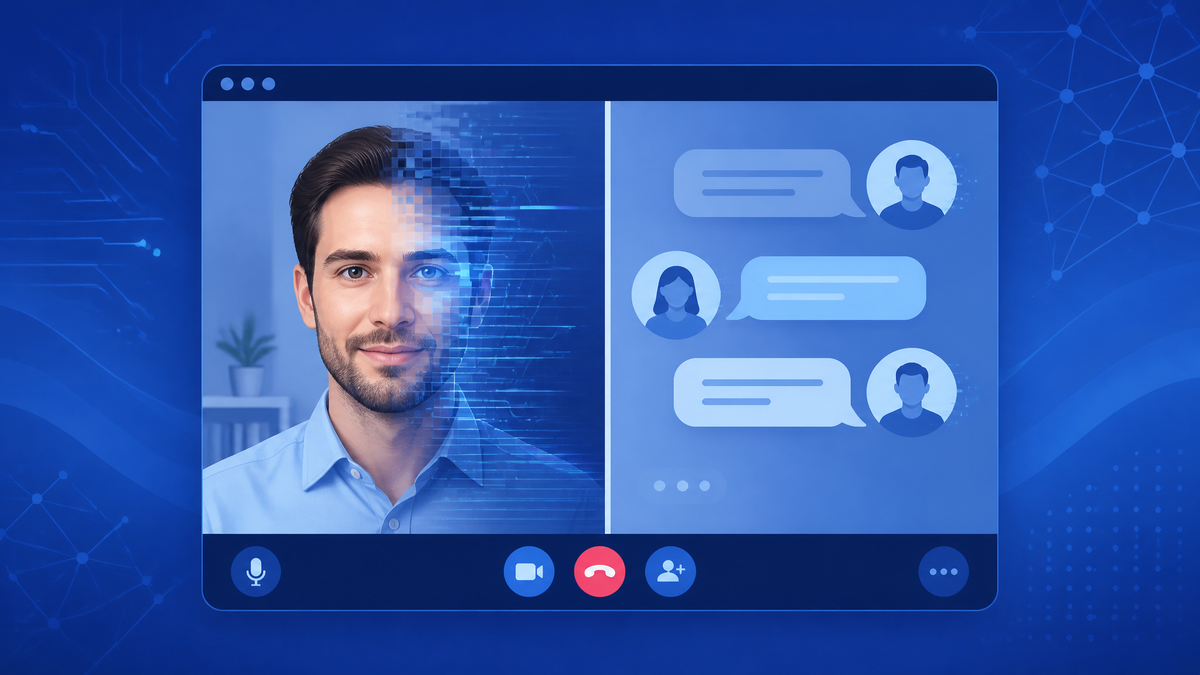
Beyond chatbots, scammers are now using deepfake technology to impersonate real people in real time. In 2025, a finance employee in Hong Kong transferred $25 million after attending a video call with what appeared to be his company's CFO — who turned out to be a deepfake.
These attacks are no longer limited to corporations. Everyday people are being targeted through:
The "Grandparent Scam" — Upgraded with AI
A grandparent receives a panicked phone call from what sounds exactly like their grandchild's voice: *"Gran, I've been arrested. I need bail money right now. Please don't tell Mum."* The voice is cloned from a few seconds of audio scraped from social media. The urgency is manufactured. The money wired is real.
Fake Executive Calls
Employees receive video calls from someone who looks and sounds like their CEO, asking them to urgently transfer funds or share login credentials. The "CEO" is a real-time deepfake generated from publicly available footage.
Romance Deepfakes
Online dating scammers now use AI-generated video to "prove" they are who they claim to be — bypassing the old advice of asking for a live video call as verification.
---
Why Traditional Warning Signs No Longer Work
For years, the advice was simple: look for bad grammar, strange email addresses, and robotic responses. In 2026, that advice is dangerously outdated.
Advanced deception techniques have surged 180% year-over-year, according to fraud analysts. The old red flags are gone.
---
How to Protect Yourself
1. Verify Through a Separate Channel
If you receive any urgent request — from a "bank," a "family member," or a "colleague" — hang up or close the chat and contact them directly using a number or address you already know and trust. Never use contact details provided in the suspicious message itself.
2. Establish a Family Safe Word
Agree on a secret code word with close family members that only you would know. If someone calls claiming to be a relative in distress, ask for the safe word. An AI cannot know it.
3. Never Share One-Time Codes in Chat
No legitimate bank, government agency, or company will ever ask for your OTP, PIN, or password through a chat interface. This is always a scam.
4. Slow Down When Pressured to Act Fast
Urgency is the scammer's most powerful weapon. If anyone — human or AI — is pushing you to act immediately, that's your signal to pause and verify.
5. Use a Scam Detection Tool
Before you respond to a suspicious message or click a link, paste the text into GuardScan. GuardScan uses AI to analyse the message and flag manipulation tactics, urgency signals, and known scam patterns — giving you a clear risk assessment in seconds.
---
What to Do If You've Been Targeted
---
The Bottom Line
AI has made scammers faster, smarter, and far more convincing. The fake chatbot that greets you on a spoofed website, the voice that sounds like your grandchild, the video call with your "boss" — these are no longer science fiction. They are happening right now, to real people, every day.
Your best defence is a healthy scepticism and a simple rule: when in doubt, verify through a channel you control. And when a message feels off, let GuardScan take a look before you act.